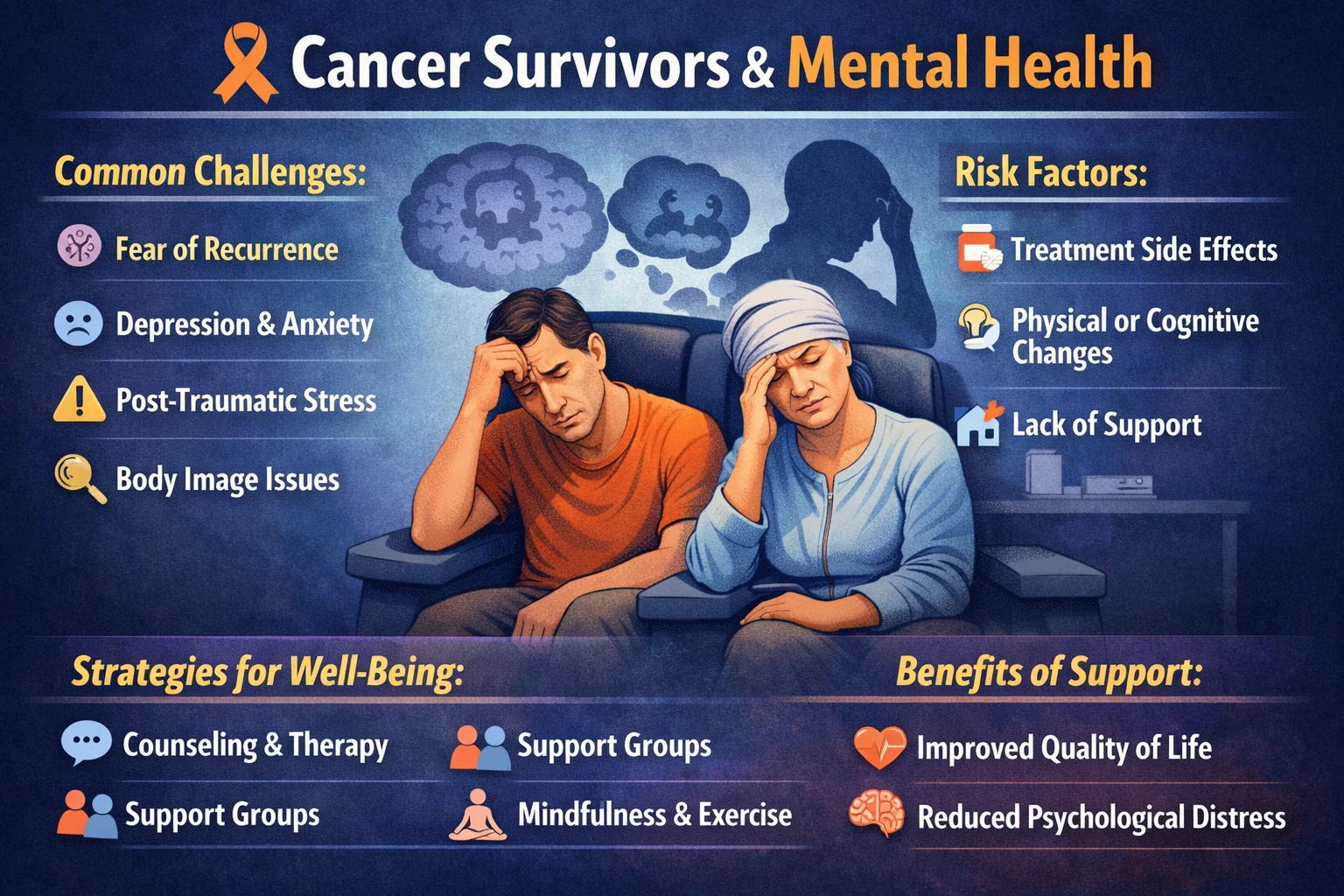
Completing cancer treatment is often described as a moment of relief and victory. Family, friends, and even patients themselves expect life to return to normal once chemotherapy, radiation, or surgery ends. However, for many cancer survivors, the emotional journey does not end with the last treatment session.
Depression and fear of cancer recurrence are common but often overlooked challenges in cancer survivorship. These mental health concerns may quietly affect quality of life, relationships, sleep, and overall well-being — even when the body appears physically healed. Understanding these issues is essential for long-term recovery and holistic cancer care.
Fear of recurrence refers to the persistent worry that cancer may return or spread, even after successful treatment and normal follow-up reports.
This fear can be:
For many survivors, every ache, cough, or test result triggers anxiety, despite medical reassurance.
Depression after cancer treatment is not a sign of weakness. It is a real and medically recognized condition that can develop due to:
Unlike temporary sadness, depression persists for weeks or months and affects emotional, physical, and mental functioning.
Cancer survivors may experience one or more of the following symptoms:
These symptoms may appear months or even years after treatment, which is why long-term mental health monitoring is important.
Cancer survival is not only about eliminating disease — it is about restoring quality of life. Untreated depression and anxiety can:
Modern oncology recognizes that mental health care is an essential part of survivorship, not an optional add-on.
Talking with a mental health professional helps survivors:
In some cancer survivors, emotional symptoms such as persistent anxiety, low mood, panic attacks, or sleep disturbances do not improve with reassurance alone. In such cases, consulting a qualified psychiatrist becomes an important part of comprehensive survivorship care. A psychiatrist can accurately diagnose depression or anxiety disorders, guide therapy, and prescribe medications when required. For cancer survivors in Uttar Pradesh, consulting an experienced psychiatrist in Lucknow, such as Dr. Pranshu Agarwal and others, can help address post-treatment mental health challenges in a structured, compassionate, and medically safe manner.
These approaches strengthen emotional resilience and reduce isolation.
A survivor should consider mental health support if:
Seeking help early prevents symptoms from becoming chronic and improves overall recovery.
Family members often assume that emotional struggles end with treatment completion. In reality, support after treatment is just as important.
Simple actions such as:
can make a significant difference in a survivor’s mental health journey.
Surviving cancer is a major milestone, but true recovery involves both physical and emotional healing. Depression and fear of recurrence are common, valid, and treatable conditions among cancer survivors.
With timely psychological and psychiatric support, survivors can regain confidence, emotional balance, and a sense of control over their lives. Addressing mental health is not a sign of weakness — it is a sign of comprehensive and responsible cancer care.

Master course in Laparoscopic Liver Resections, Institute of Medical and Minimal Access Surgery Training Mumbai


 dr.harshit.02@gmail.com


 +91-8104598623


