Why Food Matters More Than You Think
Nutrition plays a big role in breast cancer prevention. While food alone can’t guarantee protection, research shows that certain nutrients can lower inflammation, reduce cell damage, and support hormone balance. These small, daily choices add up and can make your body more resilient over time.
Think of this guide as your friendly, easy-to-follow roadmap for choosing foods that reduce breast cancer risk without stressing over long recipes or restrictive rules.
What Science Says About Diet & Breast Cancer Risk
Studies from organizations like the American Cancer Society, WHO, and Harvard School of Public Health highlight clear patterns:
- Diets rich in plants, healthy fats, fiber, and antioxidants lower risk.
- Diets high in processed meats, sugary foods, and alcohol increase risk.
- Maintaining a healthy weight through the right diet reduces hormonal imbalance, especially estrogen-related cancers.
Let’s break down the foods that can help the most.
Top Foods That Reduce Breast Cancer Risk
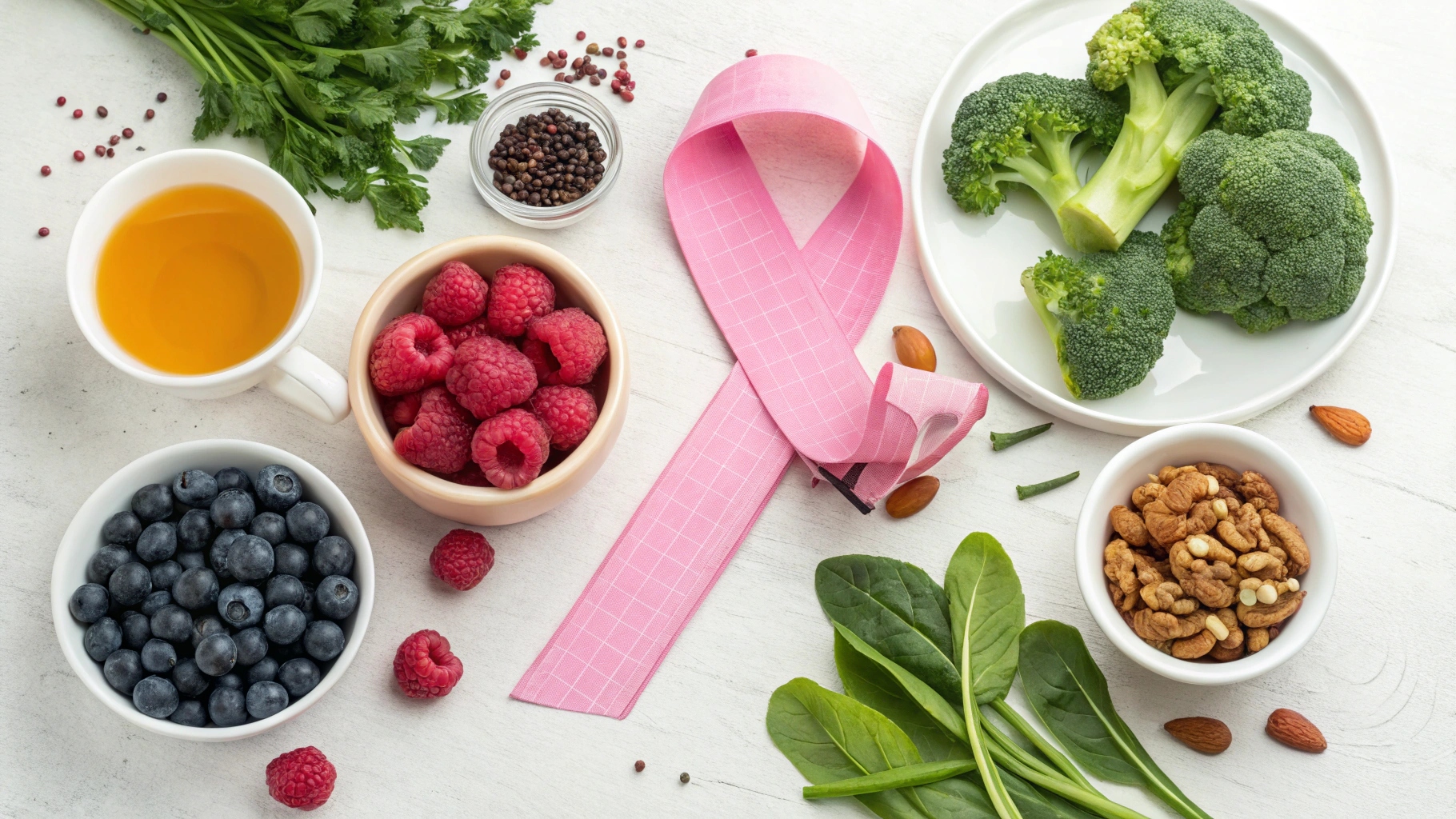
These foods fight inflammation, support hormones, repair cells, and strengthen your immune system. Use them daily or weekly to build a protective diet.
Cruciferous Vegetables (Broccoli, Cauliflower, Cabbage)
Cruciferous veggies contain sulforaphane and indole-3-carbinol, compounds known for lowering estrogen dominance and reducing tumor growth.
Benefits
- Supports detoxification
- Balances hormones
- Reduces inflammation
How to Use
- Add broccoli to stir-fries
- Mix cabbage into salads
- Steam cauliflower with turmeric
Berries (Blueberries, Strawberries, Raspberries)
Berries are loaded with antioxidants, especially anthocyanins, which repair cell damage and slow cancer cell growth.
Benefits
- Fight free radicals
- Boost immunity
- High-fiber and low-sugar
How to Use
- Add to smoothies
- Mix into oats or yogurt
- Snack on a handful daily
Leafy Greens (Spinach, Kale, Swiss Chard)
Leafy greens are high in folate, vitamins A, C, K, and anti-inflammatory phytonutrients.
Benefits
- Supports DNA repair
- Reduces oxidative stress
- Helps maintain healthy weight
How to Use
- Toss into soups and curries
- Blend into green smoothies
- Saute with garlic and olive oil
Fatty Fish (Salmon, Sardines, Mackerel)
Rich in omega-3 fatty acids, which reduce chronic inflammation and may slow cancer growth.
Benefits
- Improves hormone regulation
- Lowers inflammation
- Supports heart and brain health
How to Use
- Grill salmon with lemon
- Add sardines to salads
- Eat fish 2–3 times a week
Flaxseeds & Chia Seeds
Flaxseeds in particular contain lignans, a plant compound linked to lower breast cancer risk in multiple studies.
Benefits
- High-fiber
- Balances estrogen
- Stabilizes insulin
How to Use
- Add ground flax to smoothies
- Use chia in puddings
- Mix into roti dough
Turmeric
Turmeric contains curcumin, known for powerful anti-inflammatory and anti-cancer effects.
Benefits
- Reduces tumor-promoting inflammation
- Improves cell repair
- Supports immune function
How to Use
- Add to lentils, curries, soups
- Make turmeric milk
- Combine with black pepper for better absorption
Garlic & Onions
These contain organosulfur compounds that protect cells from DNA damage.
Benefits
- Boosts immunity
- Helps detoxify the body
- Slows cancer cell growth
How to Use
- Add garlic to daily cooking
- Use onions in salads and sabzis
- Roast them for deeper flavor
Tomatoes
Tomatoes are rich in lycopene, a strong antioxidant that targets breast tissue protection.
Benefits
- Fights oxidative stress
- Supports breast cell health
- Works best when cooked
How to Use
- Make tomato soup
- Add tomato puree to curries
- Eat roasted tomatoes
Soy Foods (Tofu, Edamame, Tempeh)
Soy contains isoflavones, plant estrogens that block stronger human estrogens linked with breast cancer. Modern research confirms soy is safe and protective.
Benefits
- Supports hormone balance
- Contains high-quality protein
- Lowers inflammation
How to Use
- Add tofu to stir-fries
- Snack on steamed edamame
- Blend soy milk into smoothies
Whole Grains (Oats, Brown Rice, Quinoa)
Whole grains deliver fiber, antioxidants, and nutrients that stabilize hormones and improve digestion.
Benefits
- Supports weight management
- Reduces estrogen reabsorption
- Maintains gut health
How to Use
- Switch from white rice to brown
- Have oats for breakfast
- Use quinoa in salads
Herbs & Spices That Support Breast Cancer Prevention
1. Ginger
Supports immunity, reduces inflammation.
2. Cinnamon
Stabilizes blood sugar and reduces oxidative stress.
3. Black Pepper
Boosts nutrient absorption, especially turmeric.
What to Limit or Avoid
These foods aren't forbidden but reducing them helps create a cancer-protective lifestyle.
Limit
- Alcohol
- Sugary foods
- Processed meats
- Deep-fried foods
- High-fat packaged snacks
- Refined grains like white bread
Why?
They increase hormonal imbalance, inflammation, and weight gain.
Lifestyle Tips That Multiply the Benefits
Food alone isn’t the whole picture. Combine it with these habits:
Move daily
30-minute walk or yoga helps balance hormones.
Maintain healthy weight
Even small weight loss helps reduce estrogen dominance.
Reduce stress
Chronic stress harms hormonal balance.
Sleep 7–8 hours
Good sleep improves immunity and cell repair.
Conclusion
Choosing the right foods is one of the simplest and most powerful ways to reduce breast cancer risk naturally. You don’t need to make huge changes in one day. Start with one or two habits, repeat them, and build a routine that feels good for your mind and body.
When your diet is full of colorful plants, healthy fats, whole grains, and protective nutrients, your body becomes stronger, more balanced, and more resilient.
FAQs
Food cannot guarantee prevention, but it plays a major role in lowering risk by controlling inflammation, hormones, and cell damage.
Berries are most effective because of their antioxidants, fiber, and anti-inflammatory compounds.
Yes. Modern studies show soy foods are protective and do not increase cancer risk.
Daily consumption gives the best long-term benefits. Even small portions help when taken consistently.
Avoid or limit alcohol, sugar, processed meats, deep-fried foods, and ultra-processed snacks.


 dr.harshit.02@gmail.com


 +91-8104598623


