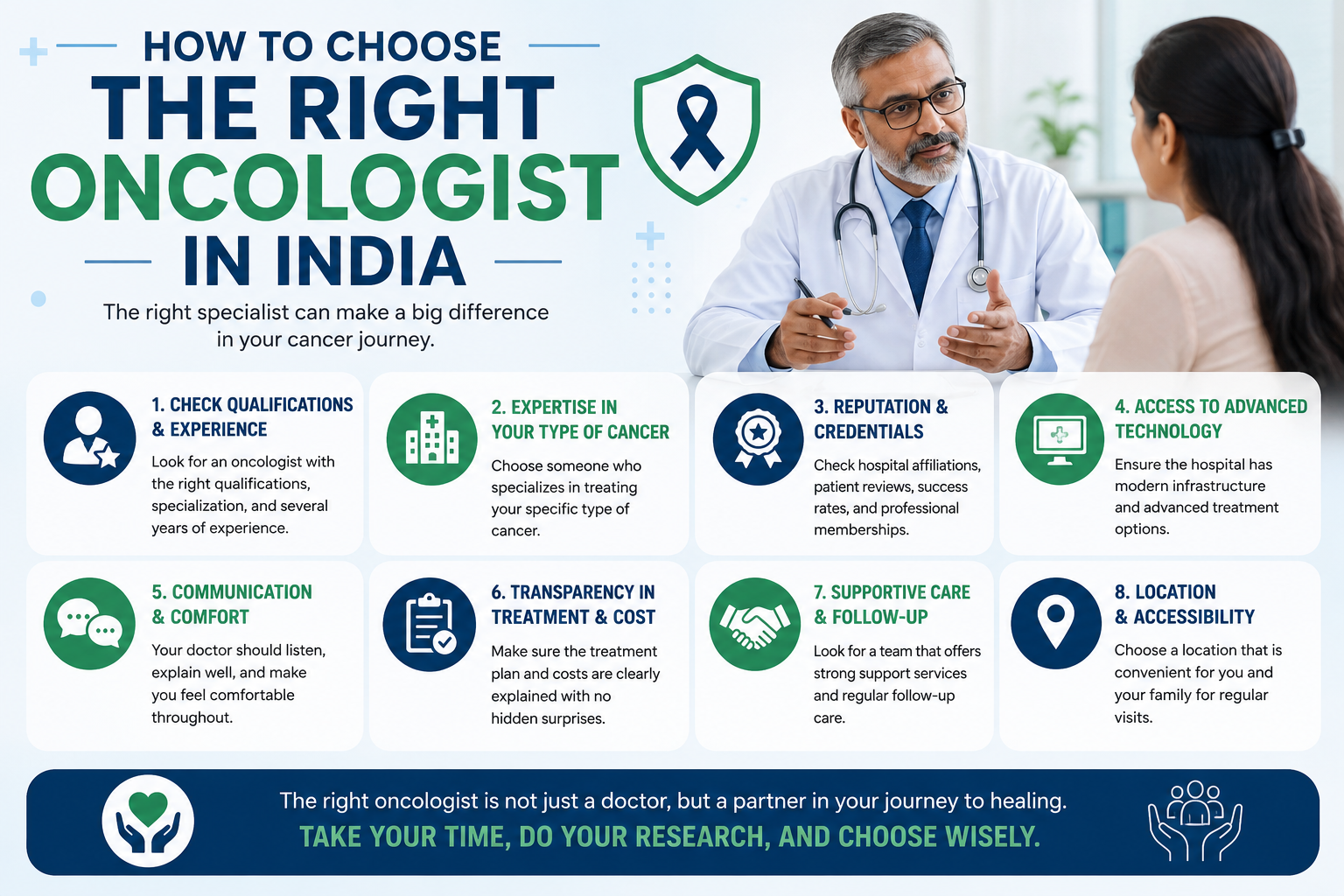
A cancer diagnosis changes everything in an instant. The fear, the uncertainty, and the flood of questions that follow can feel overwhelming — not just for the patient, but for the entire family. One of the first and most critical decisions you will face is: who should treat me? Choosing the right oncologist is not simply a medical decision; it is a deeply personal one that can influence your treatment outcomes, your quality of life during therapy, and your emotional well-being throughout the journey.
What many patients do not realize early enough is that the best oncologist for their specific condition may not always be in their own city. India is a vast country with pockets of medical excellence spread across different states, and the specialist best suited to treat your type of cancer may be practicing in a different city altogether. This guide is designed to help patients and their families make an informed, confident, and timely decision — without panic, and without compromise.
Cancer is not one disease — it is hundreds of different diseases, each requiring a different treatment strategy, a different level of expertise, and sometimes a different kind of specialist. A general physician or even a multi-specialty hospital may not always have the depth of expertise needed for your specific diagnosis.
There are three primary types of oncologists, and understanding the difference matters. A medical oncologist manages chemotherapy, immunotherapy, and targeted therapy. A surgical oncologist performs biopsies and tumor removal surgeries. A radiation oncologist specializes in radiation-based treatments. Depending on your cancer type and stage, you may need one or all three working together as a team.
The right oncologist does not just prescribe a treatment — they improve the accuracy of your diagnosis, increase the likelihood of successful treatment, manage side effects more effectively, and provide the kind of patient communication that helps families navigate one of the hardest experiences of their lives. This is why the choice deserves as much thought and research as possible, even if it means looking beyond your local city.
Not all oncologists treat all cancers equally well. An oncologist with 15 years of experience specifically treating blood cancers brings a vastly different skill set than a general oncologist who handles all types. When evaluating a specialist, ask specifically about their experience with your cancer type — how many cases they have handled, what outcomes they have seen, and whether they follow the latest global treatment protocols.
The doctor is only as effective as the tools and team around them. When you evaluate an oncologist, evaluate their hospital simultaneously. Does the facility have advanced diagnostic equipment such as PET-CT and next-generation sequencing? Is there an ICU with dedicated oncology support? Does the hospital have a multidisciplinary tumor board — a team of specialists who collectively review complex cases and recommend the best course of treatment? These are not luxury features; they are necessities for quality cancer care.
Modern oncology has moved far beyond chemotherapy alone. Look for an oncologist who offers personalized treatment plans tailored to your cancer's genetic profile. Treatments such as targeted therapy, immunotherapy, and precision medicine have transformed outcomes for many cancer types. An oncologist who stays updated with global research and incorporates these options into their practice is the one you want on your side.
Word-of-mouth from former patients carries weight in oncology. Online reviews, patient forums, and personal referrals can give you a realistic picture of a doctor's communication style, their accessibility, and how their patients felt cared for — not just treated. Reputation in the medical community matters too; check if the oncologist has publications, speaks at conferences, or is recognized by national oncology bodies.
Cancer treatment is a long journey. Your oncologist must be someone who explains your diagnosis and treatment options in language you can understand, answers your questions without dismissal, and creates a space where your family feels informed and supported. A technically brilliant but emotionally unavailable doctor can make an already difficult experience far harder than it needs to be.
This is perhaps the most important section of this guide, and one that many patients overlook until valuable time has passed.
Lack of Specialized Treatment Locally: Rare cancers — such as certain sarcomas, neuroendocrine tumors, or rare leukemia subtypes — require sub-specialists who may not practice in every city. If your local oncologist has limited experience with your cancer type, seeking care elsewhere is not a sign of distrust — it is a sign of informed advocacy for your own health.
Need for Advanced Technology: Some treatments, such as robotic surgery, CyberKnife radiation, Proton therapy, or bone marrow transplantation, are only available at select centers across India. If your treatment protocol requires these, you will need to travel regardless of preference.
Seeking a Second Opinion: In any diagnosis involving high-risk cancer or aggressive treatment recommendations, a second opinion is not just acceptable — it is strongly recommended by oncology guidelines worldwide. Getting that second opinion from a specialist in another city or state can either confirm your current plan or reveal a better one.
Better Success Rates Elsewhere: Some oncologists and hospitals have documented higher success rates with specific cancers. Patients across India travel regularly to access the best expertise available. For instance, patients from Uttar Pradesh often explore options in Delhi, Mumbai, or other states, and conversely, patients from northern states travel to major UP medical hubs for advanced care. Similarly, patients in Punjab exploring specialized oncology care often seek out experienced specialists such as Dr. Lovedeep Singh, a well-regarded oncologist in Punjab, Mohali known for his patient-centered approach and expertise in cancer management. Having options like these available — and knowing when to use them — can make a meaningful difference in outcomes.
It is also worth noting that consulting oncologists like Dr. Harshit Srivastava in Lucknow or Dr. Yuvraj Singh in Kanpur for second opinions is a common practice among patients who want to ensure they are making the right treatment choice. The key is to build a network of expert opinions before committing to a plan.
Traveling for cancer treatment is a significant decision, but for many patients, it is the right one. The benefits include access to sub-specialized expertise that may simply not exist locally, availability of advanced treatment technologies, and care from a multidisciplinary team that collectively reviews and manages your case.
Beyond the clinical advantages, there is a psychological benefit too. When patients feel they have pursued the best possible option available to them, their confidence in the treatment process improves — and research increasingly suggests that a patient's mental state during treatment does influence outcomes. Higher confidence in your oncologist translates to better treatment adherence and a more cooperative healing process.
Honesty demands that we acknowledge the real challenges. Traveling to another city for cancer treatment involves financial costs — accommodation, transport, and sometimes extended stays. There is emotional stress for families who must rearrange their lives. Follow-up appointments become logistically complex when your doctor is far away.
These are real barriers and should be weighed honestly. For many patients, the solution lies in a hybrid approach: receiving the initial diagnosis, treatment plan, and critical interventions at the specialist center, while managing routine follow-ups with a local oncologist who coordinates with the primary treating doctor.
Here is a straightforward framework to guide your decision. First, consider the severity and complexity of your condition — the rarer or more aggressive the cancer, the stronger the case for seeking the best specialist regardless of geography. Second, evaluate the local availability of the specific treatment you need. If it is available at a reputable center in your city, traveling may not be necessary. Third, factor in financial capacity and logistical feasibility. Fourth, consider urgency — some cancers require immediate treatment, and extensive travel planning may not be viable. Finally, assess your family support system and whether a caregiver can accompany you.
When the majority of these factors point toward specialized care outside your city, trust that instinct and act on it promptly.
Preparation makes the consultation far more productive. Carry all medical reports — biopsy reports, imaging scans, blood work, and any prior treatment records. Prepare a written list of questions covering your diagnosis, treatment options, timelines, and potential side effects. Verify the doctor's credentials in advance — their qualifications, specialty training, and institutional affiliations. Confirm the hospital's facilities, particularly whether the technologies relevant to your treatment are available. Finally, plan your logistics in advance — accommodation near the hospital, transport arrangements, and a plan for accompanying family members.
A second opinion is one of the most powerful tools available to a cancer patient. Globally, oncology guidelines recommend second opinions for complex, rare, or high-stakes diagnoses. They can validate your current treatment plan, reveal alternative approaches, correct misdiagnoses, and ultimately give you far greater confidence in the path ahead. No ethical oncologist will discourage you from seeking one — and those who do should themselves raise a red flag.
Choosing the right oncologist is one of the most consequential decisions you will ever make — but it is also a manageable one when approached with the right information. The most important message is this: do not let geography alone dictate who treats you. Cancer care in India has advanced enormously, and specialists of genuine excellence exist across the country — in Lucknow, in Punjab, in Delhi, in Mumbai, and beyond.
Focus on expertise, infrastructure, specialization, and trust. Ask hard questions. Seek second opinions without hesitation. And remember that traveling for the right care is not a burden — it is an investment in your life. Make your decision early, make it informed, and move forward with confidence.

Master course in Laparoscopic Liver Resections, Institute of Medical and Minimal Access Surgery Training Mumbai


 dr.harshit.02@gmail.com


 +91-8104598623


