A lung cancer diagnosis changes everything in an instant. The word alone carries weight — fear, questions, and the urgent need to know: What happens next? What are my options? Will I be okay?
Surgery remains one of the most effective treatments for early to mid-stage lung cancer. And in recent years, how that surgery is performed has changed dramatically. Robotic-assisted surgery is now giving patients a faster, safer, and less painful path through treatment — and if you're exploring your options, consulting the best surgical oncologist in Lucknow is the most important first step you can take. Dr. Harshit Srivastava, a leading thoracic and surgical oncologist at Apollomedics Hospital, Lucknow, has helped hundreds of patients navigate lung cancer with precision, compassion, and the most advanced surgical techniques available today.
This blog breaks down everything you need to know about robotic surgery for lung cancer
Robotic surgery for lung cancer is not science fiction — and the robot does not operate on its own.
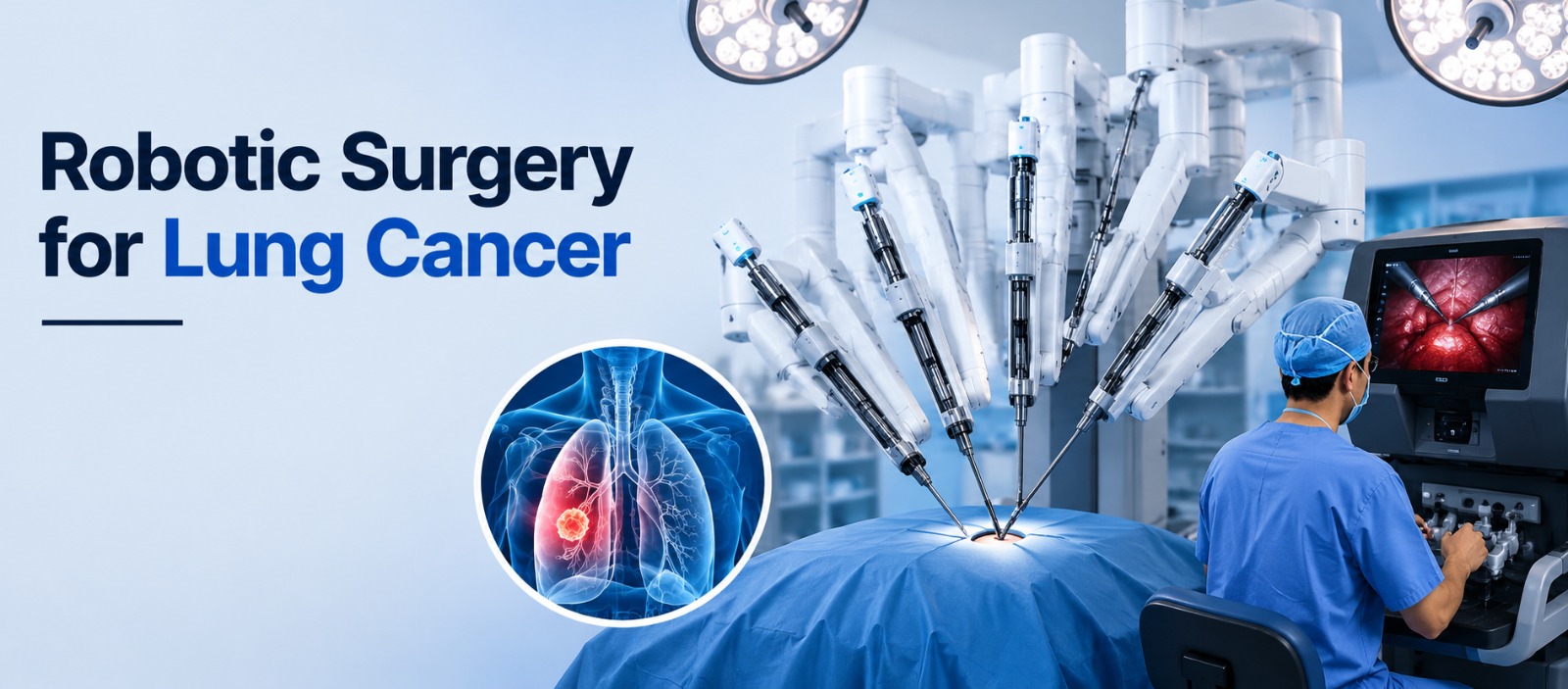
The surgeon is always in complete control. Using a system called the da Vinci Surgical System, the surgeon sits at a console and guides robotic arms equipped with tiny, high-precision instruments. A 3D high-definition camera — magnified up to 10 times — gives the surgeon a crystal-clear view of your chest cavity.
Small keyhole incisions (usually 3–4, each less than 1 cm) replace the large chest opening used in traditional open surgery. Through these tiny cuts, the robotic instruments can bend and rotate far beyond what a human wrist can do naturally.
The result? Greater precision. Less trauma to surrounding tissue. A dramatically better experience for the patient.
This approach is medically known as RATS — Robotic-Assisted Thoracoscopic Surgery — and it's now considered a gold-standard technique for resectable (surgically removable) lung cancer.
Robotic surgery is most commonly recommended for:
Your oncologist will evaluate your imaging, lung function tests, and overall health to determine if robotic surgery is right for you. Not every patient is a candidate — but for those who are, the advantages are significant.
Here is where robotic surgery truly sets itself apart from conventional approaches.
1. Far Smaller Incisions
Traditional open thoracotomy requires a large incision across the chest and ribs spread apart — a highly invasive approach. Robotic surgery uses keyhole cuts, dramatically reducing damage to muscles and bone.
2. Less Blood Loss During Surgery
The precision of robotic instruments means less accidental cutting of blood vessels. Patients undergoing robotic lung resection typically experience significantly lower intraoperative blood loss compared to open surgery.
3. Significantly Less Post-Operative Pain
This is one of the biggest quality-of-life differences. Because the ribs are never spread apart, patients report far less pain after surgery. Many go home with oral pain medication rather than IV drips or extended pain management protocols.
4. Shorter Hospital Stay
Open thoracotomy patients often stay 5–7 days in the hospital. With robotic surgery, most patients are discharged within 1–3 days — sometimes even sooner.
5. Faster Return to Normal Life
Recovery from open lung surgery can take 6–8 weeks or longer. With robotic-assisted surgery, many patients return to light daily activities within 1–2 weeks and resume normal life within 3–4 weeks.
6. Lower Risk of Complications
Smaller incisions mean lower risk of wound infections, reduced chance of blood clots, and less strain on the body overall. Studies also show lower rates of conversion to open surgery when experienced surgeons perform robotic lobectomies.
7. More Precise Lymph Node Removal
The 10x magnification of the robotic system allows surgeons to remove the lymph node packets around the tumor with exceptional precision — which is critical for accurate cancer staging and ensuring no microscopic cancer is left behind.
These benefits are not theoretical. They are backed by clinical evidence and felt directly by patients in their day-to-day recovery.
Understanding what actually happens helps reduce fear and anxiety. Here is what the process looks like:
Before Surgery
You will undergo a series of tests — CT scans, PET scans, pulmonary function tests, and bloodwork — to confirm you are a suitable candidate. Your surgical team will explain the procedure, risks, and what to expect.
On the Day of Surgery
You will receive general anesthesia. The surgical team will position you on your side. Three to four tiny incisions are made in your chest wall.
During the Procedure
The surgeon controls the robotic arms from a nearby console. The camera feeds a magnified 3D image in real time. Instruments navigate the chest cavity with precision that exceeds what human hands alone can achieve in such a confined space. The affected lung tissue — a lobe or segment — is carefully removed. Lymph nodes in the area are also removed and sent for pathological examination.
Closing Up
A small drainage tube (chest tube) is placed temporarily to drain fluid and help the lung re-expand. The incisions are closed with sutures or surgical glue. Total operative time is typically 2–4 hours.
Recovery after robotic lung surgery is often much smoother than patients anticipate. Thanks to the minimally invasive nature of the procedure, many individuals experience less discomfort, shorter hospital stays, and a quicker return to normal activities.
Below is a general timeline of what recovery may look like:
In the Hospital (Days 1–3)
Week 1–2 at Home
Week 3–4
After 4–6 Weeks
It is important to remember that every patient's recovery journey is unique. Factors such as age, overall health, and the extent of the surgery can influence healing time. Your medical team will provide personalized guidance and recommendations based on your individual progress.
Understanding the differences between surgical approaches can help patients make informed decisions about their treatment. The comparison below highlights how robotic surgery differs from traditional open surgery and Video-Assisted Thoracoscopic Surgery (VATS).
| Feature | Open Thoracotomy | VATS | Robotic Surgery |
|---|---|---|---|
| Incision Size | 15–20 cm | 2–4 cm ports | 1–2 cm ports |
| Rib Spreading | Required | May be needed in some cases | Not required |
| Camera View | Direct visualization | 2D imaging | High-definition 3D magnified view |
| Instrument Range | Standard surgical movement | Limited maneuverability | Full 360° wristed movement |
| Hospital Stay | 5–7 days | 2–4 days | 1–3 days |
| Recovery Time | 6–8 weeks | 3–5 weeks | 1–3 weeks |
| Post-operative Pain | High | Moderate | Low |
Robotic surgery offers many of the advantages of minimally invasive surgery while providing surgeons with enhanced precision, greater dexterity, and superior visualization. By combining the small-incision benefits of VATS with advanced robotic technology, it delivers an effective treatment option that can improve surgical accuracy and support faster patient recovery.
Robotic surgery is an advanced technology, but the quality of outcomes depends heavily on the expertise of the surgeon performing the procedure. Factors such as specialized training, surgical experience, case volume, and the ability to manage unexpected challenges during surgery all play a critical role in achieving the best possible results.
Dr. Harshit Srivastava has received specialized training from Tata Memorial Hospital, Mumbai, one of India's most respected centers for cancer treatment and surgical oncology. His expertise in minimally invasive and robotic thoracic surgery, combined with experience from more than 1,000 surgeries and over 5,000 patient consultations, allows him to provide comprehensive, patient-centered cancer care.
When evaluating options for lung cancer surgery, patients should consider asking their surgeon the following questions:
The answers to these questions can help patients better understand their surgeon's experience and make informed decisions about their treatment. Choosing an experienced surgeon can provide greater confidence and contribute to the best possible surgical outcome.
A diagnosis of lung cancer can feel overwhelming, but advances in surgical technology and cancer care have created new opportunities for effective treatment and improved recovery. Patients today have access to innovative approaches that can offer excellent outcomes while minimizing the impact of surgery on their daily lives.
Robotic lung surgery represents a significant advancement in thoracic oncology. Smaller incisions, reduced postoperative pain, shorter hospital stays, faster recovery, and excellent oncologic outcomes make it an attractive option for appropriately selected patients.
For many individuals, robotic surgery can transform what was once a lengthy and difficult recovery into a much smoother healing experience. However, timely evaluation remains essential, as early intervention often leads to better treatment outcomes.
If you or someone you care about has been diagnosed with lung cancer and would like to explore surgical treatment options, consulting an experienced specialist is an important first step. Understanding your diagnosis, available treatments, and potential outcomes can help you move forward with clarity and confidence.
To learn more about robotic lung cancer surgery and personalized treatment options, schedule a consultation with Dr. Harshit Srivastava at Apollomedics Hospital, Lucknow, and take the next step toward expert care and informed decision-making.

Master course in Laparoscopic Liver Resections, Institute of Medical and Minimal Access Surgery Training Mumbai


 dr.harshit.02@gmail.com


 +91-8104598623


