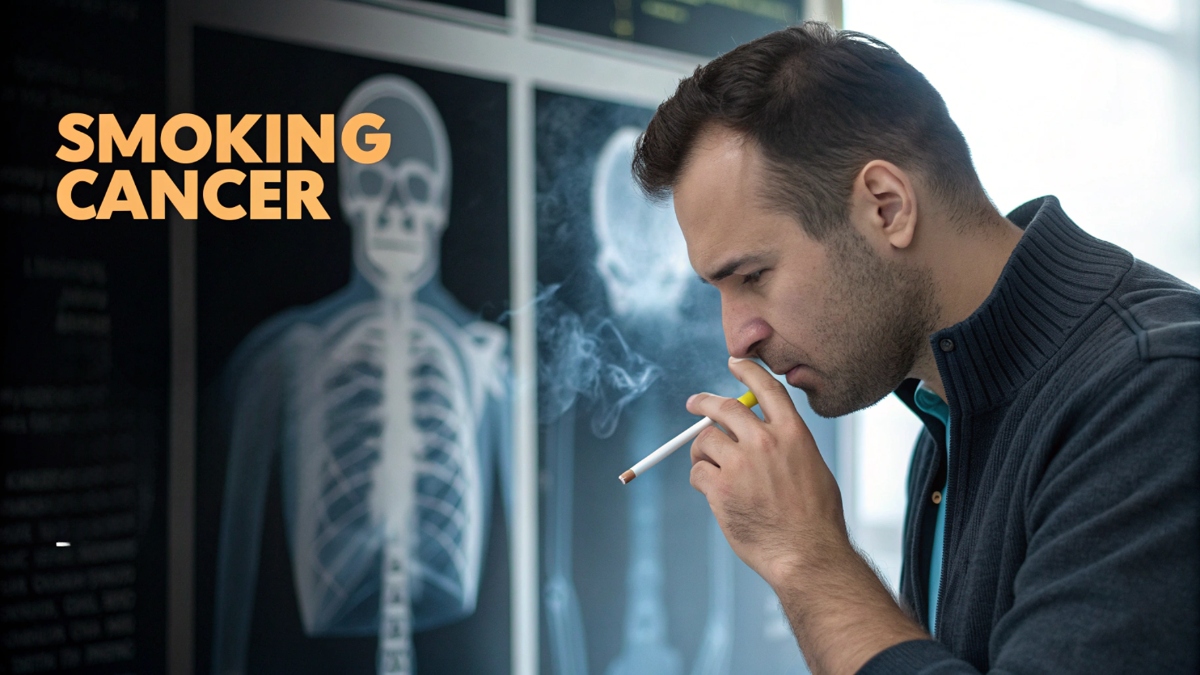
If you’re a man who smokes — or someone worried about a man who does — one question should be impossible to ignore: “How does smoking affect men’s cancer risk, specifically?”
Most people know smoking is dangerous.
But few understand how deeply it rewires a man’s hormonal system, immune response, reproductive health, and long-term cancer risk.
Men face a higher cancer burden than women, and smoking multiplies that gap even more.
This is not about fear.
It’s about clarity — so you can make decisions that protect your life, energy, and future.
Let’s break the science down in a way that’s practical, direct, and medically accurate.
Men and women do not respond to smoking the same way. Men have:
All of these increase the intensity and impact of tobacco toxins. So when we talk about smoking effects on men’s cancer risk, we’re not just analyzing general harm — we’re looking at a gender-specific vulnerability.
Smoking affects almost every organ system. But for men, certain cancers become dramatically more likely.
Here’s how smoking interacts with male biology and raises cancer risk step by step.
Smoking is the strongest known predictor of lung cancer — and men historically develop lung cancer earlier and more aggressively.
Why the gender difference?
Cancers of the: Mouth, Throat, Voice box, Tongue, Esophagus are significantly more common in men.
Why?
Together, these factors create a cancer-friendly environment that grows quietly for years.
This is one area men must take seriously. Smoking does not necessarily cause prostate cancer — but it makes existing prostate cancer more aggressive, harder to treat, and more likely to recur.
Smoking affects prostate cancer by:
Men who smoke and develop prostate cancer often face more complicated recovery journeys.
Bladder cancer is strongly linked to smoking — and men develop it three to four times more often than women.
Why this huge difference?
Because bladder cancer risk rises when toxins filtered by the kidneys accumulate in the bladder. Men's urinary physiology combined with smoking's chemical load increases this risk dramatically.
Smoking is the number one risk factor for bladder cancer in men.
Smoking damages the tiny blood vessels in the kidneys and exposes them to carcinogens in concentrated form.
This leads to:
For men already at risk due to hypertension or diabetes, smoking multiplies the danger.
Smoking affects the digestive tract by:
Together, these changes increase stomach cancer rates in male smokers.
This is one of the hardest cancers to detect early — and smoking is one of the strongest risk factors.
For men, the risk is even higher due to:
Pancreatic cancer is aggressive and often discovered late, making prevention even more critical.
Men already have a higher baseline risk of liver disease. Smoking adds:
This dramatically increases liver cancer risk over time.
Men face higher colon cancer rates than women — and smoking pushes that risk further upward.
Why?
This risk is often underestimated, especially by long-term smokers.
Smoking not only raises cancer risk — it affects the entire male reproductive system.
Men who smoke often experience:
While these may not cause cancer directly, hormonal disruption plays a role in overall cancer susceptibility.
Understanding the mechanism helps men take this risk seriously.
Tobacco smoke contains thousands of chemicals. Many directly damage DNA, making cancer more likely.
A weakened immune system fails to detect and destroy cancer cells early.
For men, smoking disrupts key hormones that influence overall health and cancer risk.
Hormones play a major role in male cancers.
Lower oxygen means tissues become more vulnerable to malignant changes.
Inflammation fuels cancer growth over years.
Kidneys and bladder are especially vulnerable to accumulated carcinogens.
Early cancer detection saves lives. All men — especially smokers — should watch for:
Ignoring symptoms is one of the reasons men often present with late-stage cancers.
These practical strategies help men reverse some smoking-related damage.
Your body starts healing immediately:
Quitting is the single strongest way to extend your life.
To counter smoke-induced oxidative stress:
These support DNA repair.
Men who smoke and stay inactive have the highest cancer rates. Even 30 minutes a day improves:
Smoking + alcohol = exponential cancer risk increase. Especially for throat, mouth, and esophageal cancers.
Smokers already have inflammation; processed meats add more carcinogenic load.
Helps kidneys flush out toxins.
For men with a smoking history, screening is not optional — it’s essential. Talk to a doctor about screening for:
Early detection changes everything.
Many men continue smoking because of:
But the truth is: every single day without smoking repairs your body in measurable ways. You don’t need to be perfect — you just need to start.
Cancers linked to smoking are preventable. Most men know the risks — but they underestimate how gender makes those risks more severe. Understanding your specific vulnerabilities empowers you to act early, act smart, and choose habits that extend life, strength, and vitality.

Master course in Laparoscopic Liver Resections, Institute of Medical and Minimal Access Surgery Training Mumbai


 dr.harshit.02@gmail.com


 +91-8104598623


