“I’ve never smoked a cigarette in my life.” It’s one of the most common things oncologists hear from newly diagnosed lung cancer patients, right before the shock sets in.
Lung cancer has always worn a “smoker’s disease” label. But that label is outdated. A growing number of people who have never lit a cigarette are being diagnosed every year, and most of them never saw it coming.
If you’ve ever assumed your lungs are safe simply because you don’t smoke, this blog is for you. Let’s break down the real, lesser-known causes of lung cancer in non-smokers — and what you can do about it.
Globally, nearly 10% to 20% of lung cancer cases occur in people who have never smoked. In women, this number is even higher in several regions. Doctors now treat non-smoker lung cancer almost like a separate disease, because it behaves differently, spreads differently, and often gets caught later — simply because no one is looking for it.
The scary part? Many of these causes are hiding in everyday life: your home, your workplace, even the air outside your window.
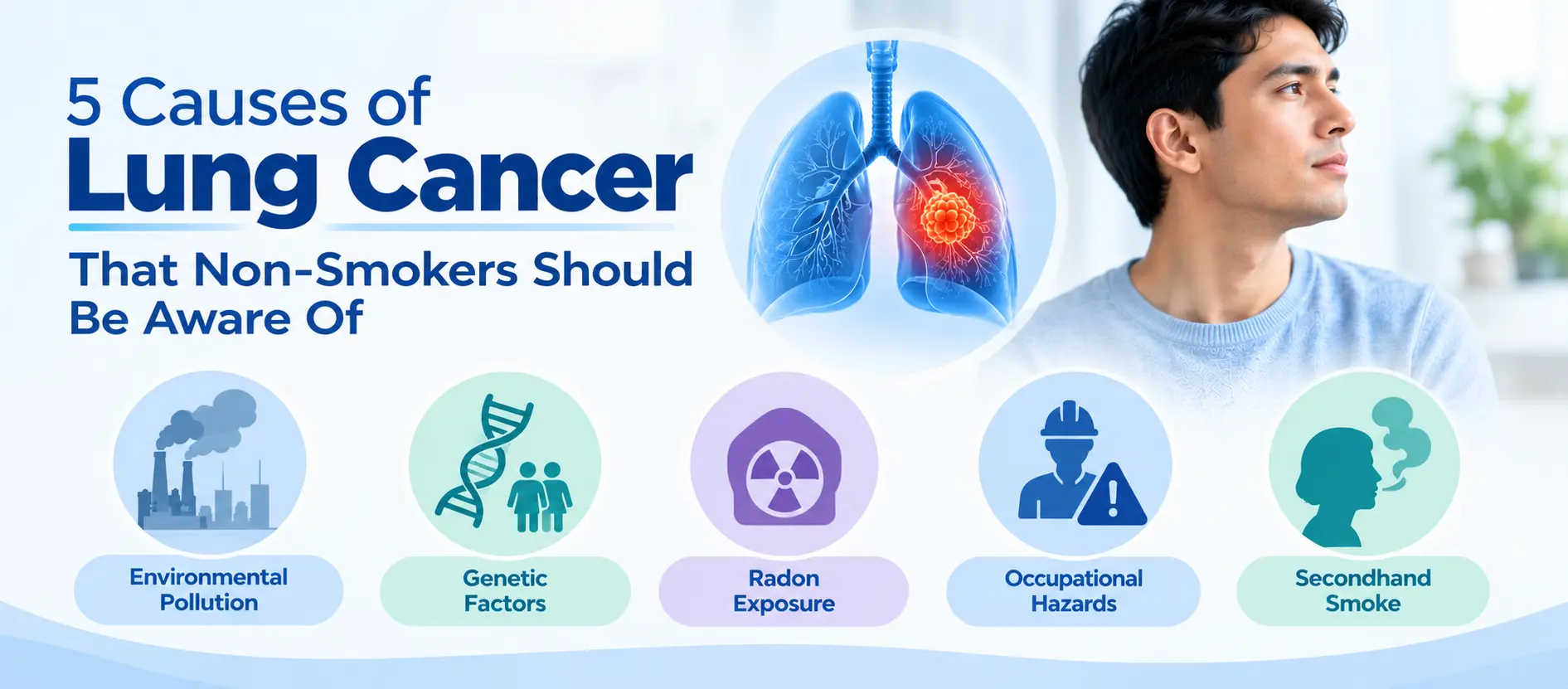
Here are the 5 causes every non-smoker needs to know.
Radon is a naturally occurring radioactive gas. You cannot see it, smell it, or taste it — which is exactly what makes it dangerous.
This gas seeps up from the soil and can collect inside homes and buildings, especially in basements, ground-floor rooms, or poorly ventilated spaces. Over years of exposure, breathing in radon damages lung tissue at a cellular level.
Radon testing kits are inexpensive and widely available. If you’ve lived in the same home for years and never tested for radon, it’s worth doing.
You don’t have to smoke to suffer the consequences of smoke. Secondhand smoke contains the same harmful chemicals as the smoke inhaled directly by a smoker.
Spouses, children, and coworkers of smokers are regularly exposed without choice. Over time, this passive exposure adds up.
If someone close to you smokes, encouraging smoke-free spaces at home isn’t just a lifestyle choice — it’s protection.
This is one of the fastest-growing causes of lung cancer in non-smokers, and it’s one most people overlook completely.
Fine particulate matter (known as PM2.5) floats in polluted air and is small enough to travel deep into the lungs. Over years of breathing in contaminated air, these particles trigger inflammation and abnormal cell changes that can eventually turn cancerous.
Using air purifiers indoors, checking local air quality index readings, and avoiding outdoor activity on high-pollution days are small steps that genuinely help.
Certain jobs carry hidden lung cancer risks that workers aren’t always warned about. Repeated exposure to industrial substances can silently damage lung tissue over the years.
Common workplace risk factors include:
People who work in these environments should wear protective gear, follow safety protocols strictly, and consider periodic lung health checkups — especially if symptoms like a persistent cough appear.
Not every cause of lung cancer comes from the environment. Sometimes, the risk is written into your genes.
Certain inherited gene mutations make lung cells more vulnerable to turning cancerous, even without any exposure to smoke, radon, or pollution. Non-smokers with lung cancer often show different genetic mutation patterns compared to smokers, which is why genetic testing has become an important part of modern diagnosis and treatment planning.
If lung cancer runs in your family, mention it to your doctor — this single detail can change how closely you’re monitored.
Because lung cancer isn’t “supposed to happen” to non-smokers, symptoms often get brushed aside for months. Watch out for:
None of these symptoms automatically mean cancer. But if they persist for more than a few weeks, they deserve a proper medical evaluation, not a guess.
Lung cancer in non-smokers tends to get diagnosed later simply because neither patients nor, sometimes, doctors suspect it early on. That delay can affect treatment outcomes significantly.
This is exactly why timely evaluation by an experienced specialist matters so much. Getting assessed early by the Best Surgical Oncologist in Lucknow can make the difference between catching the disease at a highly treatable stage versus an advanced one.
Dr. Harshit Srivastava brings focused expertise in diagnosing and surgically managing lung and other cancers, with an approach built around early detection, precise evaluation, and personalized treatment planning. For anyone experiencing unexplained respiratory symptoms, or carrying known risk factors like family history or workplace exposure, consulting a specialist early is simply the smarter choice.
If you or a loved one notice persistent symptoms, don’t wait for them to worsen before seeking an opinion. A short consultation today could lead to a much simpler treatment path tomorrow.
Lung cancer has never been exclusively a smoker’s disease, and the evidence keeps growing every year. Radon in your home, polluted air outside, secondhand smoke, workplace chemicals, and genetics can all quietly build risk — regardless of whether you’ve ever touched a cigarette.
The good news is that awareness changes outcomes. Testing your home for radon, improving air quality around you, knowing your family history, and paying attention to persistent symptoms are all within your control.
And when something does feel off, don’t dismiss it. Reach out to a specialist, ask questions, and get checked. Your lungs will thank you for it.

Master course in Laparoscopic Liver Resections, Institute of Medical and Minimal Access Surgery Training Mumbai


 dr.harshit.02@gmail.com


 +91-8104598623


